Most "day trading strategies" you see online have never been tested on more than a good-looking screenshot. But one of the oldest setups in the book — the Opening Range Breakout, or ORB — was recently put through a serious, multi-year backtest by researchers. The surprising part: with strict rules, it actually held up. Here is what they found and exactly how you can test it yourself.
Who studied it, and where (the who / what / when)
The most-cited modern test is "Can Day Trading Really Be Profitable?" by Carlo Zarattini and Andrew Aziz, published in 2023 and freely available on SSRN (the open research library where finance authors post working papers). Zarattini is a quantitative researcher; Aziz is a well-known trader and author. The idea itself is much older — floor traders like Toby Crabel wrote about opening-range setups back in the 1990s — but this paper gave it a modern, honest backtest.
What they actually did (the how they studied it)
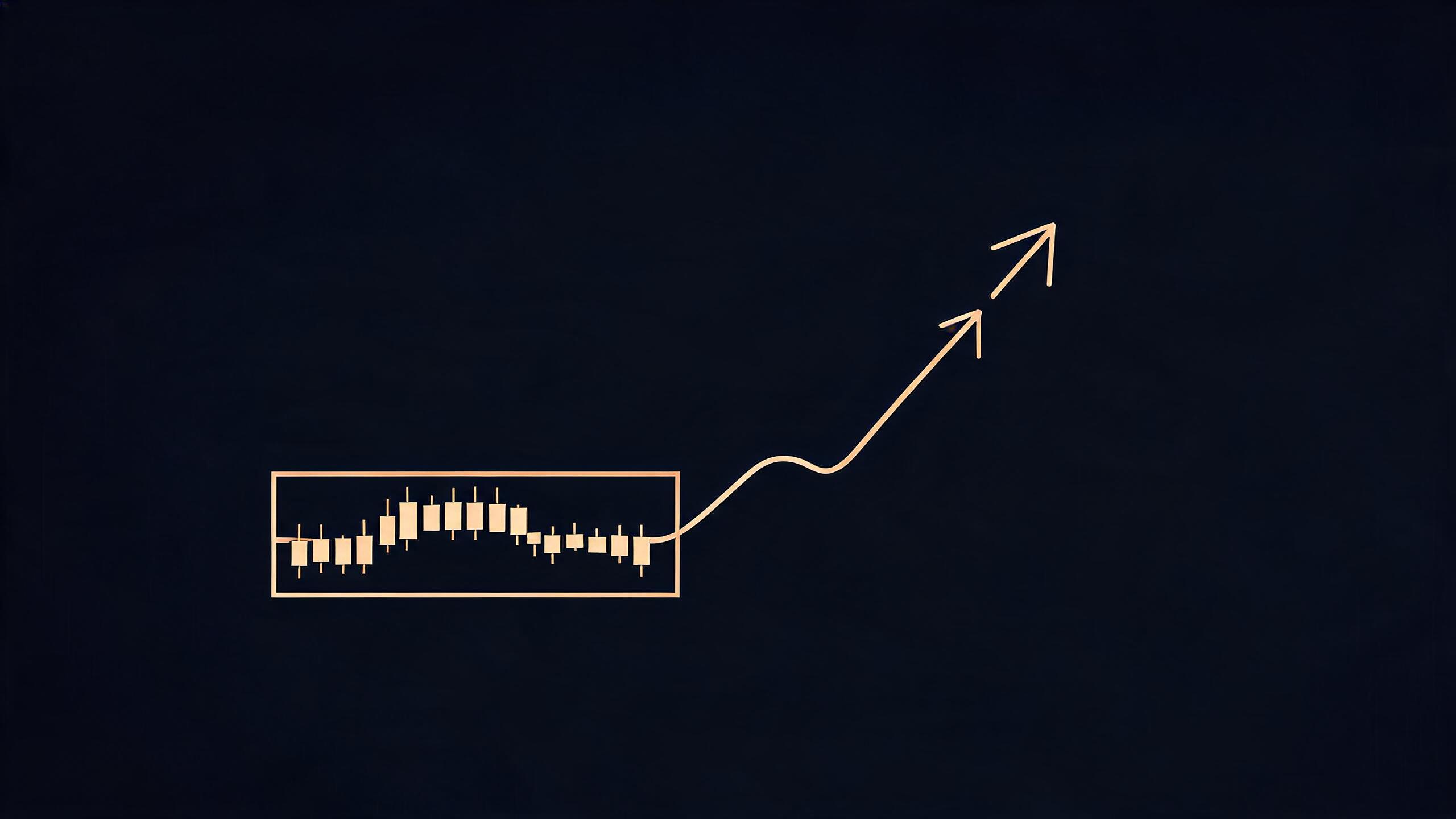
They defined a simple rule around the market open and tested it on years of intraday data. The core idea: the market's first few minutes set a "range" — a high and a low. If price later breaks above that opening high, you go long; if it breaks below the opening low, you go short. You use the size of that opening range to set your stop, and you exit at the end of the day (or at a target). They compared this to simply buying and holding, and they measured it after realistic trading costs.
What they found (the data points)
The authors reported that a disciplined ORB approach produced strong risk-adjusted returns over the test period, beating a simple buy-and-hold on the same instrument once trades were sized sensibly. The edge did not come from being right every time — win rates were middling — it came from cutting losers fast at the opposite side of the range and letting winners run to the close. In other words, the payoff was in the shape of the trades, not the hit rate.
The one "equation" — explained like you are 12
There is no scary formula, just a definition. The opening range is the high and low of the first N minutes of the session:
Opening Range = [highest price, lowest price] during the first N minutes
People commonly use N = 5, 15, or 30 minutes. The range size is just the high minus the low, and it does double duty: it is your volatility gauge for the day and your stop distance. A common rule is to risk one range-width — if you buy the breakout above the opening high, your stop sits back near the opening low. That way a wild, wide-range morning automatically gives you a wider stop, and a calm morning gives you a tighter one. The market sizes the trade for you.
The rules (what to actually do)
- Mark the range: record the high and low of the first N minutes after the open.
- Entry: go long if price breaks above the opening high; go short if it breaks below the opening low. Take only the first clean break.
- Stop: place it on the other side of the range (or a fraction of the range width).
- Exit: close at the end of the session, or at a multiple of the range as a target. No overnight risk.
Why it should work (the why)
The market open is when the most information and the most orders hit at once — overnight news, economic releases, and traders reacting all collide in the first few minutes. That burst often sets the day's direction. A clean break of the opening range is the market "voting" on which way it wants to go, and once a direction wins early, momentum can carry it. You are not predicting; you are waiting for the market to show its hand and then following.
Does it still hold — honestly?
With real caveats. ORB is very sensitive to costs because it trades every day — slippage on the breakout can quietly eat the edge, so you must test after fees. It also has false-breakout risk: choppy, rangebound days will stop you out on both sides, which is why a range-based stop and an end-of-day exit matter. And the best N (5 vs 30 minutes) and the best session differ by market, so you must re-test on your instrument. The good news for you: opening-range logic works on anything with a clear session open — index futures, gold, crude, and major forex pairs around the London and New York opens.
Build and test it in TapeScript, step by step
- Create it in plain English. Type: "Build an opening range breakout on 5-minute MNQ: mark the high and low of the first 15 minutes after the 9:30 ET open; go long if price breaks above that high, short if it breaks below that low; stop on the opposite side of the range; exit at the session close."
- Classify and baseline. Type: "Classify this and run the baseline backtest with realistic costs and slippage." ORB only counts if it survives fees.
- Prove the trade shape. Type: "Run the MAE/MFE analysis — am I cutting losers at the range and letting winners run to the close?" This is where an ORB edge lives or dies.
- Find the right open. Type: "Sweep the opening-range length from 5 to 30 minutes and show the parameter heatmap." A smooth plateau means a real edge; a lonely spike means curve-fitting.
- Filter the chop. Type: "Test adding a filter that only takes the breakout when the opening range is larger than its 20-day average — does skipping quiet mornings help?"
- Prove it out of sample. Type: "Run walk-forward and Monte-Carlo, then spend the untouched holdout."
- Pressure-test for funding. Type: "Simulate this on Topstep and Apex and show my pass odds and worst-day drawdown."
The bottom line
The Opening Range Breakout is one of the few classic day-trading setups with a real, published backtest behind it — but that same research is a warning: it only worked with strict stops, honest costs, and letting winners run. TapeScript builds the rule for you and runs the exact MAE/MFE, sweep, and holdout tests that separate a true opening-range edge from a pretty screenshot. Test an ORB strategy the honest way →
Citation: Zarattini, C., & Aziz, A. (2023). "Can Day Trading Really Be Profitable? Evidence of Sustainable Long-Term Profits from Opening Range Breakout on US Stocks." Free on SSRN.