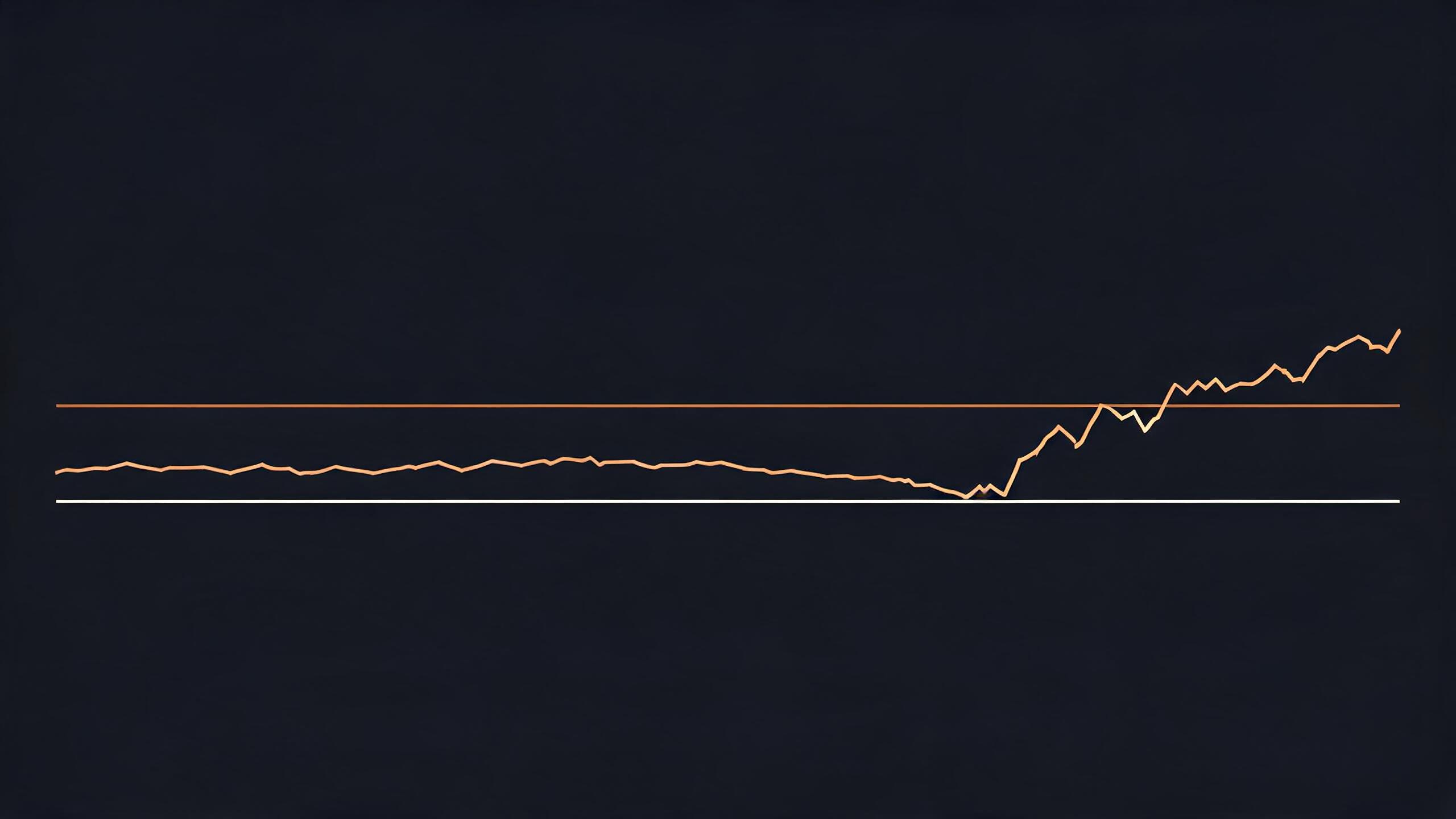
In the 1980s, a trader named Richard Dennis bet that he could teach complete beginners to trade profitably using a simple mechanical rule. The students were called the "Turtles," and the heart of their system was one of the oldest tools in trading: the Donchian channel breakout. Decades later, researchers put the same breakout rule through a rigorous test across dozens of markets. It held up better than most people expect.
Who studied it, and where (the who / what / when)
The rule itself comes from Richard Donchian, a pioneer of systematic trend-following in the mid-1900s. The modern, honest test is "Trend-following trading strategies in commodity futures: A re-examination" by Andrew Szakmary, Qian Shen, and Subhash Sharma, published in the Journal of Banking & Finance in 2010. They examined trend rules — including channel breakouts — across 28 futures markets over about five decades of data.
What they actually did (the how they studied it)
They took mechanical trend rules and ran them on 28 different futures contracts — grains, metals, energy, currencies, and more — from the 1950s onward. The channel-breakout idea is simple: watch the highest high and lowest low of the last N days. If today's price breaks above the N-day high, you go long. If it breaks below the N-day low, you go short. They measured whether following these breakouts, across many markets at once, produced returns you could not explain by luck.
What they found (the data points)
The authors reported that trend-following breakout rules earned significant positive returns in the large majority of the 28 markets, especially when applied as a diversified basket rather than on a single contract. The edge was remarkably consistent across very different markets — a strong hint that it taps a real, shared behavior rather than a quirk of one instrument. As always, returns were noisier and weaker in some markets and some decades.
The one "equation" — explained like you are 12
The Donchian channel is just two running records:
Upper channel = highest high of the last N days
Lower channel = lowest low of the last N days
Imagine drawing a line across the top of the last 20 days of price and another across the bottom. Those two lines form a "channel." When price pokes above the top line, it is making a new N-day high — a sign buyers are taking control — so you buy. When it drops below the bottom line, you sell or go short. The classic Turtle values were a 20-day channel to enter and a shorter 10-day channel in the opposite direction to exit. Bigger N = slower, longer trends; smaller N = faster, more trades.
Why it should work (the why)
Breakouts follow trends, and trends exist for human reasons. Information spreads slowly — big funds build positions over days and weeks, not seconds — so a market that starts moving often keeps moving as more players pile in. There is also a behavioral side: traders anchor to old prices and react late, and they cut winners too early, leaving money on the table for a rule that simply holds the trend. A new N-day high is the market saying "something changed," and the breakout rider gets in early on that change.
Does it still hold — honestly?
Yes, with a trader's respect for its weaknesses. Breakout trend-following has a low win rate — you take many small losses in choppy markets and make it all back on a few big trends, so it tests your patience. It works best diversified across many markets, because you never know which one will trend; a single contract can go years without a clean trend. And there is real evidence that trend-following returns have thinned in some periods as the strategy became crowded. The saving grace for testing: the rule is dead simple with one main knob (N), so it is hard to curve-fit — and it maps naturally onto both futures and major forex pairs.
Build and test it in TapeScript, step by step
- Create it in plain English. Type: "Build a Donchian channel breakout on daily MGC: go long when price makes a new 20-day high, go short when it makes a new 20-day low, and exit on a 10-day channel in the opposite direction."
- Classify and baseline. Type: "Classify this and run the baseline backtest with realistic costs."
- Understand the trade shape. Type: "Show me the win rate and the average winner versus average loser — is this a low-win-rate, big-winner system like trend-following should be?"
- Tune the channel safely. Type: "Sweep the entry channel length from 10 to 60 days and show the parameter heatmap." A broad plateau of good values means a real edge; a single spike means overfitting.
- Diversify like the study. Type: "Clone this onto crude oil, EURUSD, and Nasdaq futures and show the combined equity curve — does trading a basket smooth the ride?" This mirrors why the research used 28 markets.
- Stress it and spend the holdout. Type: "Run walk-forward and Monte-Carlo, then spend the untouched holdout."
- Export and verify. Type: "Export the Pine and verify it matches the backtest."
The bottom line
The Donchian breakout is the rule that turned beginners into the legendary Turtles — and a 28-market academic study says the trend edge behind it is real, if you can stomach a low win rate and trade it across markets. That is a big "if," which is exactly why you test before you trade. TapeScript builds the channel, checks the trade shape, sweeps the length, and diversifies it across markets with honest numbers. Test a channel-breakout system →
Citation: Szakmary, A. C., Shen, Q., & Sharma, S. C. (2010). "Trend-following trading strategies in commodity futures: A re-examination." Journal of Banking & Finance, 34(2), 409–426. Free versions on Google Scholar.